THE SHORT ANSWER
Not every blood test requires fasting. Some glucose tests and selected investigations may need a period without food or drinks other than plain water, while tests such as a routine CBC or HbA1c generally do not. The correct fasting duration depends on your prescribed test and the laboratory instructions.
- Only fast if your doctor or laboratory tells you to.
- Plain water is usually allowed during a prescribed fast.
- Do not stop prescribed medicines unless your clinician advises it.
Do I need to fast before every blood test?
No. Fasting means going without food and most drinks for a specified period before collecting a sample. It is useful for certain investigations because eating and drinking can temporarily change some measurements in your blood.
The most important rule is to follow the instructions for the exact test your doctor requested. A routine complete blood count (CBC), for example, usually does not require fasting. Some glucose investigations do, while an HbA1c test generally does not. Sometimes several tests are booked together, and the preparation for one of them affects the entire appointment.
Which tests might need fasting?
Fasting blood glucose is a common example: it is designed to measure blood sugar after a period without food. Certain lipid or metabolic investigations may also need fasting depending on the reason for testing and the laboratory protocol.
There is no single fasting instruction that applies to everyone. Your clinician or collection centre will tell you whether to fast and for how long. When fasting is required, the typical window is often 8 to 12 hours, but the specific instruction on your prescription takes priority.
- Fasting blood glucose: usually requires an overnight fast.
- HbA1c: usually does not require fasting when ordered on its own.
- CBC: usually needs no special preparation.
- Other panels: preparation depends on the particular tests and local protocol.
Can I drink water, tea or coffee?
If you have been asked to fast, plain water is generally permitted and can make drawing a blood sample easier. Tea, coffee, juice, milk and sweetened drinks are not part of a standard fast, even if they feel like a small amount.
Do not chew gum, smoke or undertake strenuous exercise during the fasting period unless the healthcare professional gives different instructions. These activities can influence some test results. Ask ahead if you are unsure about anything you normally consume in the morning.
PREPARING FOR YOUR VISIT
A practical checklist
- Confirm the exact fasting duration before your appointment.
- Ask what to do with your regular medicines, especially diabetes medicines.
- If you accidentally eat or drink something other than plain water, tell the collection team before the sample is taken.
What about diabetes medicine and other tablets?
Never stop, skip or change your regular medicine on your own just because a blood test is planned. Some medicines need special timing when a patient is fasting, particularly when there is a risk of low blood sugar. Your prescribing doctor should guide you.
Tell the laboratory about medicines, vitamins and supplements you take. If you have diabetes, are pregnant, feel unwell, or have difficulty fasting, contact the doctor before your appointment to agree on a safe plan.
A simple checklist for the night before
- Check the test name and whether fasting has actually been requested.
- Confirm the fasting duration and plan your appointment accordingly.
- Keep your prescription and previous reports together, if available.
- Drink plain water unless you were specifically instructed not to.
- Ask your clinician about medicines instead of making your own changes.
- Bring a light snack to have after the blood sample if you have been fasting.
What if I accidentally eat or drink something?
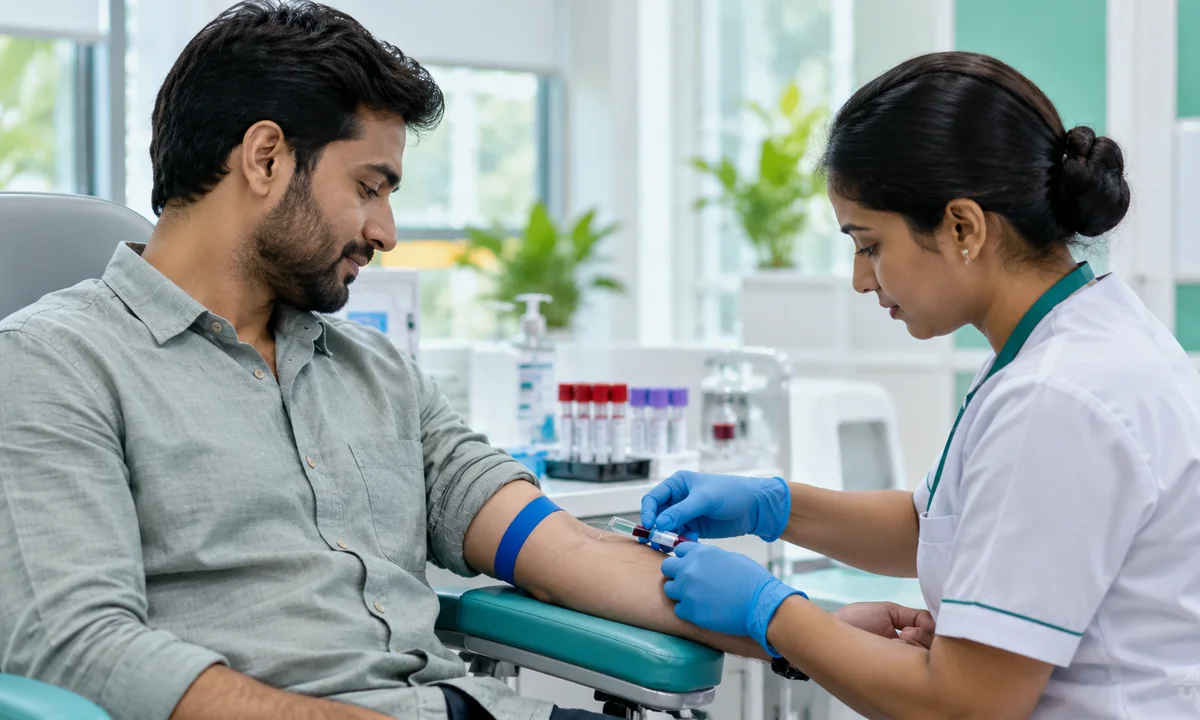
Tell the collection team what you consumed and when. Do not hide it or assume that a small snack makes no difference. The team may advise going ahead, recording the information or rearranging the particular test.
If you become dizzy or unwell while fasting, prioritise your safety and seek appropriate advice. A routine test should not require you to ignore concerning symptoms.
Booking a blood test in Howrah or Hooghly
Lakhotia Diagnostics serves patients through centres across Howrah and Hooghly. Before booking, share the exact investigations on your prescription so the team can confirm test availability, preparation and the collection time. Ask whether home sample collection is suitable for your particular test if travelling is difficult.
Good preparation is a small step that can make your visit smoother. The right instructions are always more useful than following a generic “fast for every test” rule.
LAKHOTIA DIAGNOSTICS
Need help planning a test?
Confirm test availability, preparation requirements and the most convenient centre before making your appointment.
Frequently asked questions
Can I brush my teeth before a fasting blood test?
You can generally brush your teeth as usual without swallowing toothpaste, but ask your collection team if you received unusual preparation instructions.
How many hours should I fast?
Many fasting tests use an 8–12-hour window, but follow the time stated for your exact test.
Can I take my morning medicines?
Ask your prescribing clinician. Do not alter medication without advice.
Will my appointment be cancelled if I accidentally eat?
Not always. Tell the team what and when you ate so they can advise whether the sample can be collected.
Do I need to avoid water before a fasting blood test?
Plain water is usually permitted when fasting for a routine blood test, but always follow the specific instructions for your investigation.
Sources and further reading
These independent medical resources provide background information for this patient guide. They do not establish which individual investigations are available at each Lakhotia branch.
This guide provides general information, not a diagnosis or a substitute for medical advice. Always follow your clinician's instructions and confirm current test availability and preparation with the centre.