
HEART HEALTH
Cardiology Diagnostic Services
Understand your heart rhythm, movement and response to activity.
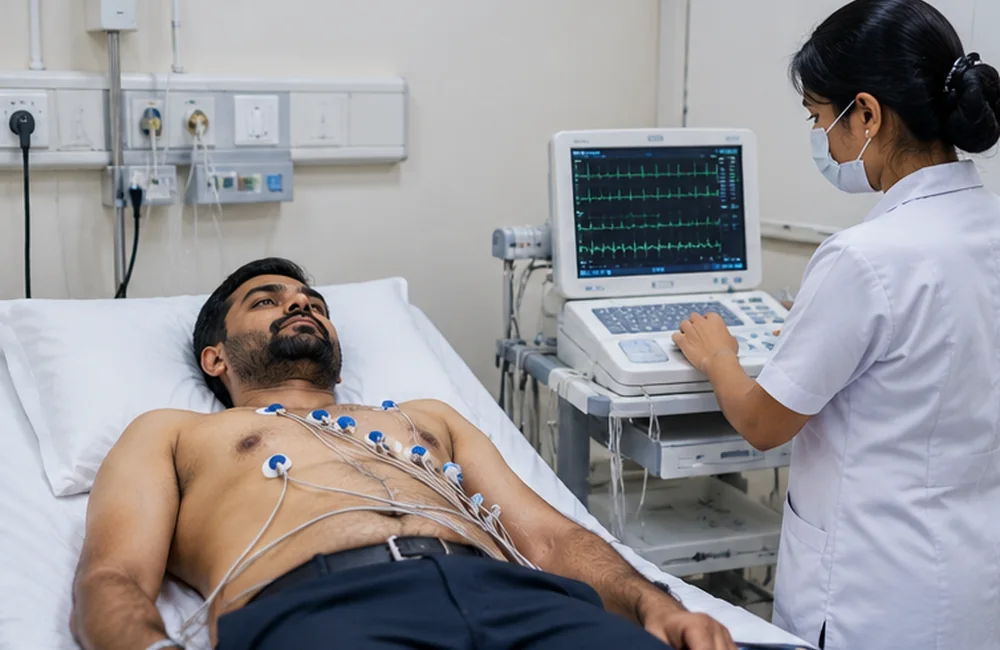
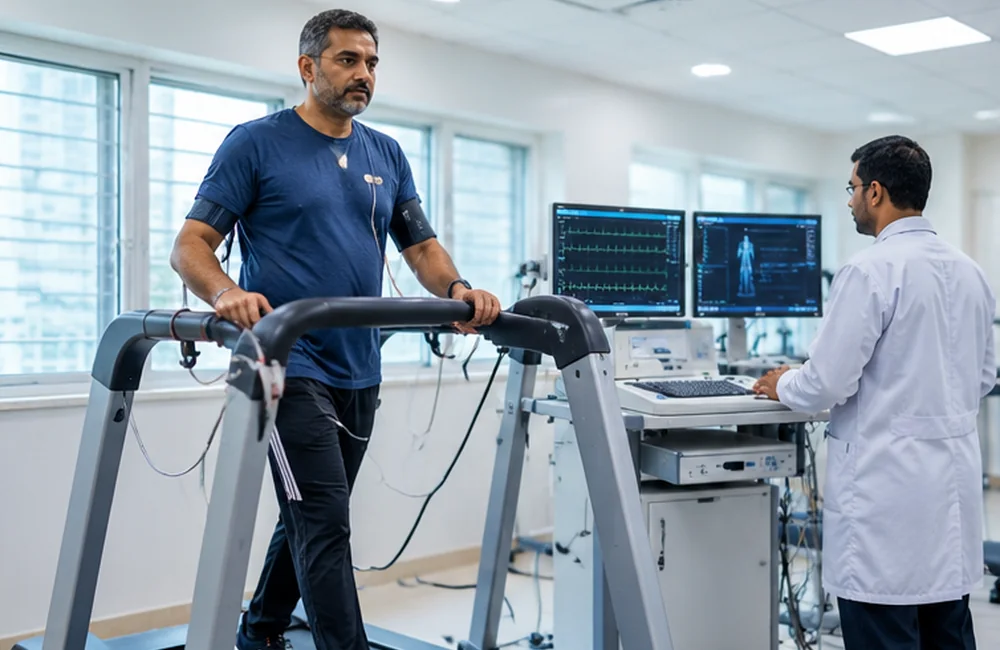
The heart beats continuously, but different tests look at different parts of its performance. An ECG records electrical signals, echocardiography creates moving ultrasound images, and a treadmill test monitors selected changes during supervised exercise. A clinician selects the test that answers your particular concern.

UNDERSTANDING THE PURPOSE
Why this may be useful
Every person is different. A healthcare professional can help decide what is appropriate.
To investigate palpitations, a murmur or some kinds of breathlessness.
To monitor a known heart condition under your doctor’s care.
To assess certain symptoms or exercise responses in medically suitable patients.
KNOW YOUR OPTIONS
What to explore
Use these guides to understand common topics. Only the confirmed test or package list should be used when making a booking.
A SIMPLE PROCESS
What to expect
Tell the team which test the doctor has requested and why.
Follow the specific instructions on clothing, food, medicines and activity.
The reporting clinician reviews the measurements and advises the treating doctor on their significance.
BEFORE YOU VISIT
How to prepare
Do not stop any heart medicine unless your own doctor instructs you.
Wear comfortable shoes for a treadmill study and mention physical limitations.
Seek emergency care for severe new chest pain, fainting or sudden breathlessness instead of waiting for a routine appointment.
Understanding the next step
One heart test cannot answer every cardiac question. An ECG, ECHO and TMT describe different aspects of heart activity; your treating doctor chooses the next step based on the full assessment.
QUESTIONS PATIENTS ASK
Frequently asked questions
Quick answers in everyday language.
Is ECG the same as echocardiography?
No. ECG is a recording of electrical activity. Echo uses ultrasound to show the heart in motion.
Can everyone have a treadmill test?
No. A clinician must check whether exercise testing is safe and suitable.
Is a standard echocardiogram painful?
A routine chest ultrasound is non-invasive and usually painless, although probe pressure can feel uncomfortable.
Do I need fasting for an ECG?
A routine resting ECG usually does not require fasting, but follow the instructions for your particular test.
LAKHOTIA DIAGNOSTICS
Questions about your next test?
Our team can guide you on the booking process and practical preparation details.